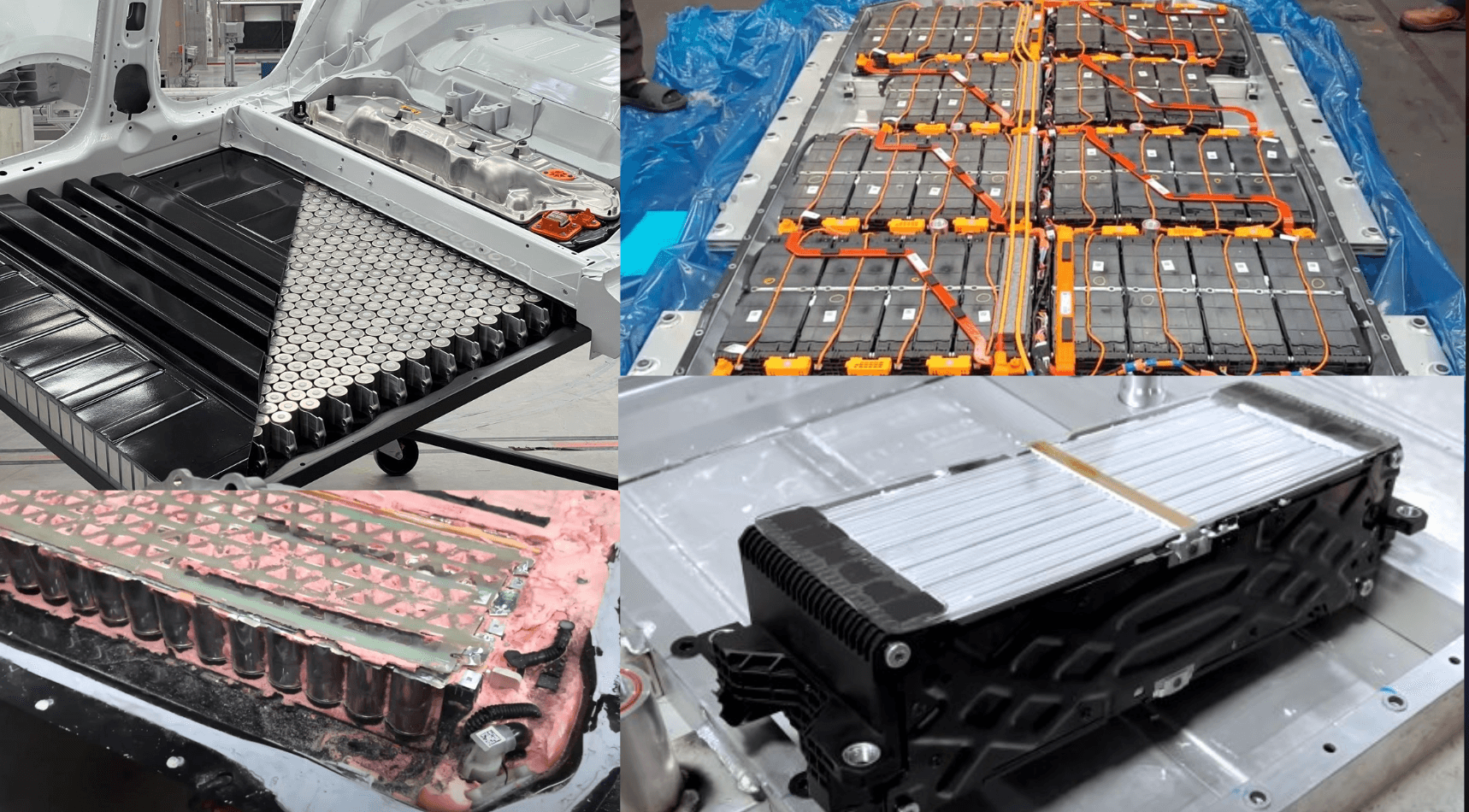
Safer batteries start with the people who handle them.
We’re building free, open-access orientation modules for workers who are new to handling, transporting, and processing lithium-ion batteries — made for day one, not for the manual.
Batteries continue to power almost everything — and large-format batteries carry a big risk that needs to be understood.
For the people who work with batteries in the real world.
Who it’s for.
If you’re entering Michigan’s battery circular economy — or you help others get there — this is for you.
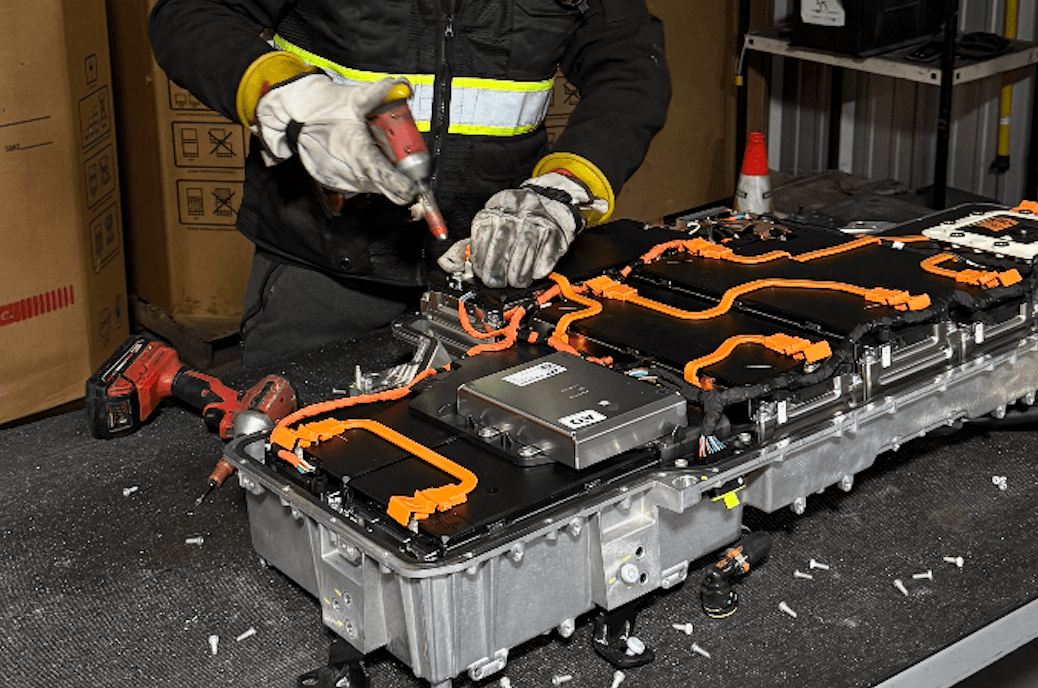 Image source: Great Lakes Recycling
New & frontline workers
Anyone starting out in lithium-ion battery recovery, reuse, and recycling.
Haulers, recyclers & OEM teams
Operations teams handling, transporting, and processing battery materials.
First responders
Those who need clear, accessible awareness of lithium-ion battery hazards.
Workforce & community programs
Trainers, educators, and organizations bringing new workers into the field.
What we’re building.
There’s plenty of technical material out there. Almost none of it is built for someone walking in the door on their first day. Empower to Comply, Electrification Academy, and VMX are partnering to change that — a set of short, multimedia orientation modules covering the core safety, handling, and awareness concepts every frontline worker should know. Free. Public. Built with the people who actually do this work.
Developed in partnership across Michigan’s battery economy
This project is part of the NextCycle Michigan initiative — a collaboration between Empower to Comply, Electrification Academy, and VMX International. We’re interviewing battery recycling technicians and facility managers across Michigan to understand real-world pain points and build education that addresses actual workplace needs.



The same concerns keep surfacing — and they’re shaping exactly what we build.
Tell us what’s missing — get the results back.
Your responses go straight into which modules we build first, and we’ll send the aggregated findings back when the survey closes. If you handle batteries day-to-day — or you’re the lead tasked with getting a team ready — this is your channel.
Michigan organizations have shared input so far
Most-cited goal: establishing standardized safety practices
Sectors weighing in: recycling, dismantling, and emergency response
Who’s weighing in
- Auto recycling & dismantling
- Emergency response
- Battery recycling & processing
Experience handling lithium-ion batteries
- 0–5 years
- 5–10 years
- 10+ years
- New to lithium-ion batteries
Safety topics stakeholders most want covered
“A battery spontaneously caught fire — outside the vehicle, with no previous damage.”
Auto recycler, Michigan
“Re-ignition after storing a damaged vehicle.”
Fire department, Michigan
“Always assume the pack is fully charged — even if it’s labeled as discharged.”
Battery recycler, Michigan
Early stakeholder input gathered by Electrification Academy. Comments are anonymized and individual responses are kept confidential. Percentages above are illustrative placeholders pending full survey data.
Building on what already exists
We’re not here to reinvent the wheel. There’s already strong safety material out there — the gap we’re addressing is making it accessible, not adding to the pile. As we talk with stakeholders, people keep pointing us to resources they trust. We’re gathering them in one place so workers can actually find them — and we want yours.
| What | Organization | Learn more |
|---|---|---|
| Electric-vehicle battery safe handling | Suppliers Partnership for the Environment | Visit |
| Battery collection best practices | U.S. Environmental Protection Agency | Visit |
| Lithium-Ion Battery Safety Tips | Michigan Department of Environment, Great Lakes, and Energy | Visit |
| Incident Management Initiative (IMI) | Energy Security Agency | Visit |
| HAZWOPER training | Occupational Safety and Health Administration | Visit |
| OSHA FactSheet 4480: Lithium-Ion Battery Safety | Occupational Safety and Health Administration | Visit |
| Emergency Response Guides | National Highway Traffic Safety Administration | Visit |
| EV Battery Fire Response Considerations | Fire Safety Research Institute (UL Research Institutes) | Visit |
| Hazmat transport rules | U.S. Department of Transportation / Pipeline and Hazardous Materials Safety Administration | Visit |
| Lithium Battery Guide for Shippers | U.S. Department of Transportation / Pipeline and Hazardous Materials Safety Administration | Visit |
| Advanced battery standards | NAATBatt International | Visit |
| Battery industry resources | Battery Council International | Visit |
| Emergency response | Vehicle manufacturers (OEMs) | Visit |
Know a resource we’ve missed?
If your team relies on something useful, send it our way.
Resources are listed for awareness based on stakeholder input. Listing here does not imply endorsement or affiliation. “Ongoing” marks a maintained hub or programme page rather than a document fixed at one publication date — always check the source for the current version.
Where this is headed.
Today we’re listening. Battery Ready will publish open-access awareness content — context and orientation that helps workers understand what they’re handling. It is not regulatory training and is not a substitute for the formal training their employer is required to provide. The matrix below is an early sketch of where awareness content might add value.
| Module | Frontline Worker | Hauler / Transport | Recycler / Dismantler | Safety Lead | First Responder |
|---|---|---|---|---|---|
Battery chemistry & application overview Major chemistries and how they appear in electric vehicles, energy storage systems, aviation, and data centers | |||||
Battery safety fundamentals Voltage, current, and the pack–module–cell architecture | |||||
Chemistry identification Telling Lithium Iron Phosphate from Nickel Manganese Cobalt for safe sorting and handling | |||||
Recognizing & assessing hazards Early signs of thermal runaway, leaks, swelling, and off-gas | |||||
Damaged & high-risk batteries Isolation and handling protocols for crashed, dropped, or compromised units | DOT | ||||
Safe storage Buffer zones, fire-retardant barriers, isolation surfaces, and chemistry-aware layouts | OSHA | EPA / OSHA | |||
Safe extraction, decommissioning & dismantling Getting the battery out of the vehicle or system, discharging it, and opening the pack to a safe state | |||||
Transport & packaging awareness Class 9 hazmat labeling, manifests, and certified container sealing | PHMSA / DOT | ||||
Manufacturing / assembly / disassembly safety Cell, module, and pack operations across production and recycling lines | |||||
Facility setup & safety monitoring Site design, alarms, and gas or temperature detection | OSHA | ||||
End-of-life pathways Deciding between reuse, recycling, and disposal | |||||
Regulatory primer Department of Transportation, Occupational Safety and Health Administration, and Environmental Protection Agency basics for your role | DOT | EPA | OSHA | ||
Liability & insurance basics Risk transfer, coverage gaps, and what insurers look for |
Early working sketch — module scope and role groupings are not finalized. Agency labels mark where a topic is governed by federal regulation and where the corresponding formal training is delivered elsewhere (e.g., the 40-hour HAZWOPER required for first responders is not provided by Battery Ready). The cell weightings shown are a starting hypothesis to react to, not a prescription of what any employer should provide. Tell us where this is off — including where the regulatory mapping is incomplete.
While we build, explore what’s already there.
When Battery Ready launches, it’ll live on Electrification Academy — alongside the workflows, equipment, and articles you can browse today.
Industry areas
Workflows from cell manufacturing to end-of-life — explore the full battery value chain.
Browse on Electrification AcademyProducts & solutions
Equipment, services, and solutions used across battery handling and processing today.
Browse on Electrification AcademyKnowledge hub
Articles and deep-dives on battery handling, safety, and the wider industry.
Browse on Electrification AcademyHelp shape what we build.
Before we finalize anything, we’re listening. Sign up to follow the project and get early access when the modules launch.
Stay in the loop